Long Son Pagoda – Nha Trang’s Spiritual Landmark Above the City
Nestled at the foot of Trai Thuy Hill in the heart of Nha Trang, Long Son Pagoda is one of Vietnam’s most revered Buddhist landmarks. Best known for its majestic Giant White Buddha overlooking the city, the pagoda offers visitors an inspiring blend of spiritual heritage, remarkable architecture, and sweeping panoramic views.
For more than a century, Long Son Pagoda has served as a place of worship, reflection, and cultural significance for both local residents and pilgrims. While many visitors come to admire the impressive Buddha statue, the pagoda offers far more than a memorable viewpoint. Its tranquil courtyards, intricately decorated temples, and enduring history provide a meaningful insight into Vietnam’s Buddhist traditions and the spiritual life of Nha Trang.
Located just a short drive from Potique Hotel, Long Son Pagoda is an essential destination for travellers seeking to experience a quieter side of the city beyond its beaches and islands. Whether you are interested in religious architecture, local history, photography, or simply a peaceful escape, the pagoda offers a rewarding journey where culture and spirituality meet.
In this guide, Potique Hotel explores the history of Long Son Pagoda, the significance of its iconic White Buddha, practical visitor information, and nearby attractions to help you make the most of your visit.
Long Son Pagoda is Nha Trang’s most famous Buddhist temple, renowned for its towering Giant White Buddha, peaceful hilltop setting, and panoramic views of the city. Located approximately 10 minutes from Potique Hotel, it offers visitors an opportunity to discover Vietnam’s Buddhist heritage while enjoying one of Nha Trang’s most iconic cultural landmarks.
Key Takeaways
- One of the most important Buddhist temples in Nha Trang.
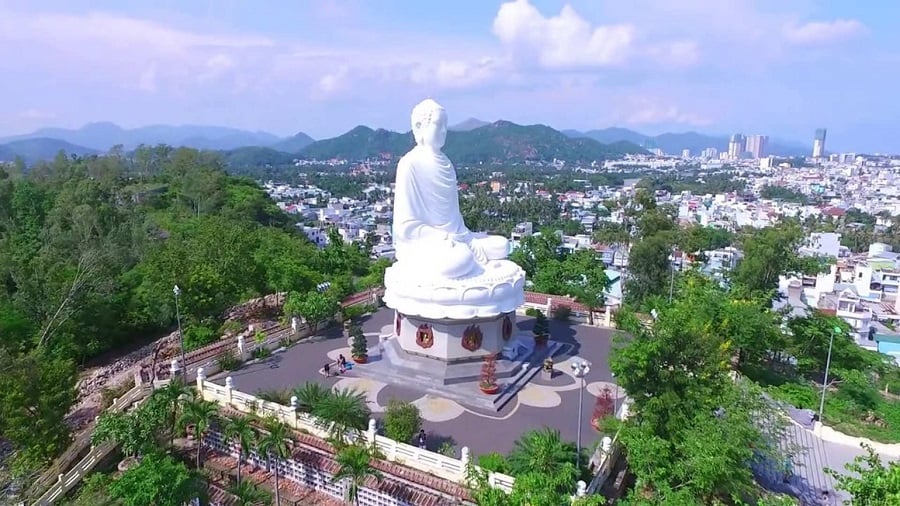
- Home to the iconic 24-metre Giant White Buddha statue.
- Established in the late 19th century with more than 140 years of history.
- Offers panoramic views overlooking Nha Trang City.
- Features traditional Vietnamese Buddhist architecture.
- Approximately 10 minutes from Potique Hotel.
- Ideal for cultural exploration, photography, and peaceful reflection.
- Easily combined with Po Nagar Cham Towers and Hon Chong Promontory for a cultural day trip.
At a Glance: Long Son Pagoda
| Information | Details |
|---|---|
| Vietnamese Name | Chùa Long Sơn |
| Location | No.22, 23 Thang 10 Street, Tay Nha Trang Ward |
| Attraction Type | Buddhist Pagoda |
| Established | 1886 |
| Famous For | Giant White Buddha, Buddhist Heritage, City Views |
| Main Statue | Kim Thân Phật Tổ (Giant White Buddha) |
| Distance from Potique Hotel | Approximately 2 km (10 minutes by car) |
| Recommended Visit Duration | 1–2 hours |
| Admission | Free (Donations Welcome) |
| Suitable For | Families, Culture Lovers, Pilgrims, Photographers |
History of Long Son Pagoda
Long Son Pagoda stands as one of the oldest and most significant Buddhist temples in Nha Trang, reflecting more than a century of religious devotion, resilience, and cultural heritage. Since its establishment in the late nineteenth century, the pagoda has evolved into one of Khanh Hoa Province’s most respected spiritual landmarks while remaining an active place of worship for the local Buddhist community.
The pagoda was originally founded in 1886 by Venerable Thich Ngo Chi on the summit of Trai Thuy Hill, where it was first known as Dang Long Tu, meaning “Slowly Flying Dragon Temple.” The elevated location offered a peaceful environment for meditation and Buddhist practice, overlooking what was then a much smaller coastal settlement.
However, nature soon altered the temple’s history. In 1900, a powerful cyclone severely damaged the original structure on the hilltop, making reconstruction at the same location impractical. To preserve the temple and continue serving the growing community, the pagoda was relocated to its present site at the foot of Trai Thuy Hill. Following its relocation, the temple became known as Long Son Pagoda, a name it proudly carries today.
Throughout the twentieth century, Long Son Pagoda expanded into an important centre of Buddhist education and religious activities in central Vietnam. Successive generations of monks oversaw the construction of new prayer halls, ceremonial spaces, and educational facilities, while preserving the pagoda’s role as a sanctuary for meditation and community gatherings.
The temple also witnessed significant moments in Vietnam’s modern history. During periods of political and social change, Long Son Pagoda became a gathering place for Buddhist leaders and devotees advocating for religious freedom and social harmony. As a result, it holds not only spiritual importance but also an enduring place in the country’s cultural memory.
Today, Long Son Pagoda welcomes hundreds of thousands of visitors each year, including pilgrims, international travellers, and local worshippers. Despite its popularity, the pagoda has retained an atmosphere of serenity. The scent of incense drifting through the courtyards, the sound of temple bells echoing across the hillside, and the quiet rhythm of daily Buddhist practice continue to create an environment that encourages contemplation and respect.
More than simply an architectural attraction, Long Son Pagoda embodies the enduring values of compassion, wisdom, and resilience that lie at the heart of Vietnamese Buddhism. Its rich history provides the foundation for understanding why the temple remains one of the most cherished cultural landmarks in Nha Trang today.
The Giant White Buddha – The Icon of Long Son Pagoda
Towering above Nha Trang from the summit of Trai Thuy Hill, the Giant White Buddha is one of Vietnam’s most recognisable Buddhist monuments and the defining symbol of Long Son Pagoda. Visible from many parts of the city, the statue has become a familiar landmark that welcomes visitors while representing peace, compassion, and spiritual enlightenment.
Known in Vietnamese as Kim Thân Phật Tổ, the seated Buddha was completed in 1964 and rises approximately 24 metres above its lotus pedestal. The serene figure depicts Shakyamuni Buddha, the historical founder of Buddhism, seated in meditation with a calm expression that reflects wisdom, inner peace, and mindfulness.
Reaching the statue requires climbing around 193 stone steps from the main pagoda grounds. While the ascent is relatively gentle, many visitors choose to pause along the way to admire smaller shrines, landscaped gardens, and panoramic viewpoints overlooking Nha Trang. The journey itself is considered part of the experience, encouraging a slower pace and moments of quiet reflection before arriving at the summit.
The elevated platform surrounding the Buddha offers one of the finest panoramic views in the city. From this peaceful vantage point, visitors can look across Nha Trang’s skyline, the Cai River, distant mountains, and the shimmering waters of Nha Trang Bay. The combination of spiritual tranquillity and breathtaking scenery makes the White Buddha one of the most memorable landmarks in central Vietnam.
A Monument to Peace and Remembrance
The Giant White Buddha carries a significance that extends beyond its impressive scale.
At the base of the statue are relief panels and commemorative plaques honouring Buddhist monks and nuns who dedicated their lives to the protection of religious freedom and humanitarian values during periods of social and political change in Vietnam. These memorials quietly remind visitors that Long Son Pagoda is not only a place of worship but also a site connected to important chapters of the country’s modern history.
For many Vietnamese Buddhists, the White Buddha represents hope, compassion, and resilience. Pilgrims often pause here to offer incense, say prayers, or simply sit in silence while overlooking the city below. Although international visitors may come primarily for the views, many find themselves equally moved by the peaceful atmosphere that surrounds the monument.
This combination of spiritual symbolism and historical memory gives the Giant White Buddha a profound cultural significance, making it much more than a popular sightseeing attraction.
Architecture of Long Son Pagoda
Long Son Pagoda is a fine example of traditional Vietnamese Buddhist architecture, where artistic craftsmanship and spiritual symbolism come together in a harmonious setting. Although the temple has undergone several renovations since its founding in 1886, it continues to preserve many architectural elements that reflect Vietnam’s Mahayana Buddhist heritage.
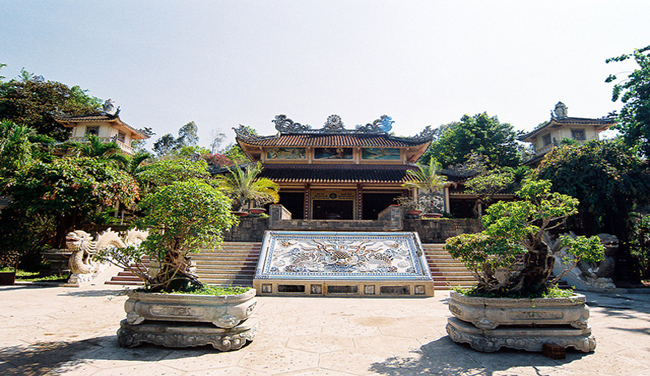
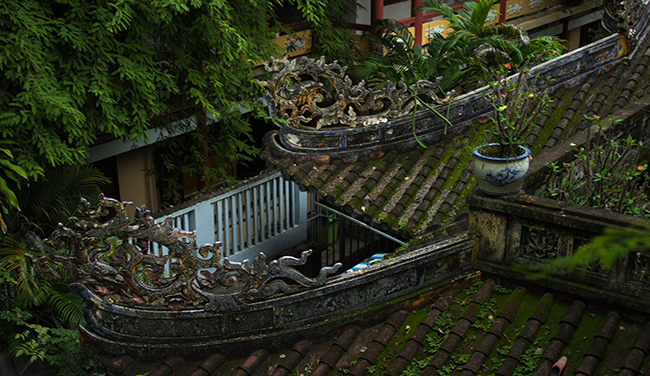
The main prayer hall welcomes visitors with gracefully curved tiled roofs, elaborate dragon sculptures, and richly ornamented entrances that embody traditional East Asian architectural aesthetics. Decorative ceramic mosaics, colourful reliefs, and finely carved wooden details further enhance the temple’s elegance while illustrating important Buddhist motifs.
Inside the sanctuary, the atmosphere shifts from the lively courtyards to one of quiet reverence. Soft natural light filters through the temple, illuminating golden statues of the Buddha, offerings of fresh flowers, and intricate altars where worshippers gather for daily prayers. The gentle fragrance of incense and the rhythmic chanting of monks create a deeply contemplative environment that reflects the living traditions of Vietnamese Buddhism.
Unlike some historic temples that function primarily as museums, Long Son Pagoda remains an active religious centre. Visitors therefore experience not only remarkable architecture but also the daily spiritual practices that continue to shape the life of the temple.
Spiritual Significance of Long Son Pagoda
For generations, Long Son Pagoda has served as one of the most important centres of Mahayana Buddhism in Khanh Hoa Province. It remains a place where local residents gather to celebrate religious festivals, participate in ceremonies, seek blessings, and practise meditation throughout the year.
The temple’s enduring role within the community reflects the central values of Buddhism, including compassion, wisdom, gratitude, and mindfulness. These principles are expressed not only through religious ceremonies but also through the welcoming atmosphere that encourages visitors of every background to experience the temple with respect.
One of the most significant occasions at Long Son Pagoda is Vesak, the annual celebration commemorating the birth, enlightenment, and passing of the Buddha. During this festival, the temple is beautifully decorated with colourful lanterns, flowers, and Buddhist flags, while thousands of devotees gather for prayers and ceremonial processions. The peaceful yet vibrant atmosphere offers visitors a unique opportunity to witness living Buddhist traditions in Vietnam.
Even outside major festivals, Long Son Pagoda remains a sanctuary of calm amid the energy of modern Nha Trang. The sound of temple bells, the quiet conversations of monks, and the simple act of watching visitors pause for reflection all contribute to an environment that encourages mindfulness and inner peace.
For many travellers, this spiritual atmosphere becomes the most memorable aspect of their visit. While the Giant White Buddha may first capture attention, it is the sense of serenity and authenticity found throughout the temple grounds that often leaves the deepest impression.
While Long Son Pagoda reflects Vietnam’s Buddhist heritage, travellers can further explore Nha Trang’s rich spiritual landscape by visiting the nearby Po Nagar Cham Towers, where centuries-old Cham architecture and Hindu traditions continue to shape the city’s diverse cultural identity.
Respectful Etiquette for Visitors
As Long Son Pagoda is an active place of worship, visitors are encouraged to observe a few simple customs to ensure a respectful and meaningful experience.
- Wear modest clothing that covers the shoulders and knees.
- Speak quietly, particularly inside prayer halls and meditation areas.
- Remove hats when entering sacred spaces where appropriate.
- Avoid touching religious statues, altars, or ceremonial objects.
- Ask permission before photographing monks or worshippers.
- Follow designated pathways and respect areas reserved for religious activities.
- Dispose of litter responsibly to help preserve the temple’s peaceful environment.
Observing these simple guidelines allows visitors to appreciate the temple’s cultural and spiritual significance while showing consideration for those who come to pray and meditate.
Did You Know?
|
Visiting Long Son Pagoda
A visit to Long Son Pagoda offers far more than an opportunity to admire one of Nha Trang’s most iconic landmarks. It is an immersive cultural experience where centuries of Buddhist tradition, remarkable architecture, and panoramic city views come together in a peaceful setting.
Most visitors begin their journey at the main temple complex before gradually ascending the stone staircase leading to the Giant White Buddha. Along the way, beautifully landscaped gardens, smaller shrines, and quiet resting areas invite moments of reflection, allowing visitors to appreciate both the spiritual atmosphere and the surrounding scenery.
Unlike many urban attractions, Long Son Pagoda encourages a slower pace. Whether listening to the gentle sound of temple bells, observing local worshippers, or admiring the intricate architectural details, visitors are invited to experience the temple with mindfulness and respect.
A typical visit lasts between one and two hours, providing ample time to explore the temple grounds, climb to the White Buddha, and enjoy the spectacular views across Nha Trang.
Visitor Information
Opening Hours
Long Son Pagoda is generally open to visitors every day.
The temple is most peaceful during the early morning, when local residents gather for prayer and meditation, and in the late afternoon, when softer sunlight creates beautiful conditions for photography.
As schedules may occasionally vary during major Buddhist festivals or religious ceremonies, visitors are encouraged to confirm current opening hours before their visit.
Admission
Admission to Long Son Pagoda is free.
As an active religious site, the temple welcomes visitors without an entrance fee. Donations are appreciated and contribute to the maintenance of the temple grounds, preservation of cultural heritage, and support for religious activities.
Visitors should only place donations in the designated donation boxes provided by the temple.
Dress Code
Appropriate attire demonstrates respect for this sacred place of worship.
Visitors are encouraged to wear:
- Clothing that covers the shoulders.
- Shorts or skirts below the knee.
- Comfortable footwear suitable for climbing stairs.
- Lightweight clothing appropriate for Nha Trang’s tropical climate.
Revealing clothing, swimwear, or attire intended for the beach should be avoided.
Accessibility
The main temple courtyard is easily accessible for most visitors.
However, reaching the Giant White Buddha requires climbing approximately 193 stone steps. Although the staircase is well maintained and includes resting points, visitors with limited mobility should allow extra time or remain within the lower temple complex, where many beautiful architectural features can still be enjoyed.
Facilities
Visitors will find several convenient facilities within the temple grounds, including:
- Restrooms.
- Small souvenir and religious gift stalls.
- Drinking water vendors nearby.
- Benches and shaded resting areas.
- Parking for motorbikes and cars.
Commercial activities remain limited, helping preserve the peaceful atmosphere of the pagoda.
Best Time to Visit
Long Son Pagoda is open throughout the year, but the overall experience varies depending on the season and time of day.
Early Morning
The hours shortly after sunrise offer one of the most rewarding experiences.
The air is cooler, the temple is quieter, and local worshippers begin their daily prayers, creating an atmosphere of authenticity and serenity. Morning light also beautifully illuminates the white Buddha statue and temple roofs.
Late Afternoon
Late afternoon is another excellent time to visit.
As temperatures become more comfortable, the elevated viewpoints reveal Nha Trang bathed in warm golden light. This is an ideal period for photography, particularly from the platform surrounding the Giant White Buddha.
Dry Season
The dry season, generally from January to August, provides the most favourable conditions for exploring the temple.
Clear skies enhance panoramic views across Nha Trang City and the surrounding mountains, while lower rainfall makes climbing the stone staircase more comfortable.
Rainy Season
From approximately September to December, occasional rain showers bring lush greenery to the temple grounds and create a peaceful atmosphere with fewer visitors.
While the steps may become slippery after rain, the mist occasionally surrounding Trai Thuy Hill offers a unique perspective rarely experienced during the dry season.
Photography Highlights
Long Son Pagoda offers some of the most photogenic cultural scenes in Nha Trang.
Among the most popular photography locations are:
- The Giant White Buddha overlooking the city.
- Panoramic views from Trai Thuy Hill.
- Traditional temple roofs decorated with dragons and ceramic mosaics.
- Incense-filled courtyards.
- Ornate Buddhist statues and lotus motifs.
- Stone staircases framed by tropical trees.
- Architectural details showcasing Vietnamese Buddhist craftsmanship.
Visitors are encouraged to photograph respectfully, particularly inside prayer halls where worshippers may be engaged in religious ceremonies.
How to Get to Long Son Pagoda from Potique Hotel
Conveniently located in central Nha Trang, Potique Hotel provides easy access to Long Son Pagoda and many of the city’s cultural attractions.
The pagoda is situated approximately 2 kilometres from the hotel, with a typical journey taking around 10 minutes by car depending on traffic.
Guests can reach the temple by:
- Taxi.
- Grab or other ride-hailing services.
- Motorbike rental.
- Bicycle for those wishing to explore the city at a leisurely pace.
The route passes through central Nha Trang before arriving at the foot of Trai Thuy Hill, making the pagoda easy to combine with other nearby landmarks.
Nearby Attractions
Long Son Pagoda is ideally located for visitors wishing to explore Nha Trang’s cultural and historical heritage.
Po Nagar Cham Towers
Just a short drive away, Po Nagar Cham Towers showcase the remarkable legacy of the Cham civilization. Together with Long Son Pagoda, these two landmarks offer fascinating insights into the diverse spiritual traditions that have shaped central Vietnam over many centuries.
Hon Chong Promontory
Continue your journey to Hon Chong Promontory, where dramatic granite formations and sweeping views of Nha Trang Bay provide a striking contrast to the peaceful atmosphere of the pagoda.
Nha Trang Cathedral
Built during the French colonial period, Nha Trang Cathedral is renowned for its Gothic architecture, stained-glass windows, and elevated location overlooking the city. It offers another perspective on Nha Trang’s rich religious heritage.
Dam Market
Experience everyday local life at Dam Market, one of Nha Trang’s best-known traditional markets. Here, visitors can browse regional specialties, handicrafts, dried seafood, and locally made souvenirs.
Suggested Half-Day Cultural Itinerary
For guests staying at Potique Hotel, the following itinerary combines three of Nha Trang’s most significant cultural attractions into a relaxed and enriching morning.
| Time | Experience |
|---|---|
| 8:00 AM | Depart Potique Hotel |
| 8:15 AM | Explore Long Son Pagoda and climb to the Giant White Buddha |
| 10:00 AM | Visit Po Nagar Cham Towers |
| 11:15 AM | Continue to Hon Chong Promontory for panoramic coastal views |
| 12:30 PM | Return to Potique Hotel or enjoy lunch at a local seafood restaurant |
This thoughtfully curated route introduces visitors to the city’s Buddhist heritage, ancient Cham civilization, and spectacular natural coastline within a single, well-paced excursion.
Why Long Son Pagoda Should Be on Every Nha Trang Itinerary
Among Nha Trang’s many attractions, Long Son Pagoda stands apart as a destination that offers far more than impressive architecture or panoramic city views. It is a place where history, spirituality, art, and local life converge, allowing visitors to experience a deeper and more authentic side of the city beyond its renowned coastline.
Unlike destinations that are appreciated primarily for their scenery, Long Son Pagoda provides meaningful insight into Vietnam’s living Buddhist traditions. Every element—from the tranquil courtyards and intricately decorated prayer halls to the gentle sound of chanting monks and the scent of burning incense—contributes to an atmosphere of serenity that has welcomed worshippers for generations. Rather than simply observing a historic monument, visitors witness a sacred place that continues to play an active role in the daily lives of the local community.
The pagoda is also home to one of Nha Trang’s most recognisable landmarks: the Giant White Buddha. Rising gracefully above the city from Trai Thuy Hill, the monumental statue rewards visitors with sweeping views across Nha Trang, the Cai River, and the surrounding mountains. The short climb to the summit transforms the visit into a memorable journey, combining cultural discovery with one of the city’s finest panoramic viewpoints.
Another reason Long Son Pagoda deserves a place on every itinerary is its accessibility. Located only a few kilometres from the city centre, it can easily be explored in one to two hours and pairs naturally with nearby attractions such as Po Nagar Cham Towers, Hon Chong Promontory, and Nha Trang Cathedral. Together, these landmarks reveal the remarkable cultural diversity that has shaped Nha Trang over centuries, from the spiritual traditions of Vietnamese Buddhism to the enduring legacy of the ancient Cham civilisation.
For photographers, the pagoda offers an abundance of visual inspiration. The elegant temple roofs, colourful ceramic mosaics, dragon sculptures, lotus motifs, and the brilliant white silhouette of the Buddha create striking compositions throughout the day. During the early morning and late afternoon, soft natural light enhances the architectural details while illuminating the city below, making these hours especially rewarding for photography.
Beyond its historical and architectural significance, Long Son Pagoda invites visitors to slow down and reconnect with the quieter rhythms of travel. Sitting beneath the shade of ancient trees, listening to the temple bells echo across the hillside, or simply admiring the view from the Buddha’s terrace offers a welcome contrast to the lively beaches and bustling streets of Nha Trang. It is an experience that encourages mindfulness, reflection, and a greater appreciation of the city’s cultural identity.
For guests of Potique Hotel, Long Son Pagoda is more than a sightseeing destination—it is an opportunity to understand the spiritual heart of Nha Trang. Whether you are interested in Buddhist heritage, Vietnamese architecture, or simply seeking a peaceful escape with exceptional views, the pagoda offers an enriching experience that complements every journey through this vibrant coastal city.
Frequently Asked Questions
What is Long Son Pagoda famous for?
Long Son Pagoda is best known for its 24-metre Giant White Buddha, one of the most iconic landmarks in Nha Trang. The pagoda is also renowned for its rich Buddhist heritage, traditional Vietnamese architecture, peaceful atmosphere, and panoramic views from Trai Thuy Hill.
Where is Long Son Pagoda located?
Long Son Pagoda is located at No.22, 23 Thang 10 Street, Tay Nha Trang Ward, Khanh Hoa Province, approximately 2 kilometres from Potique Hotel and around 10 minutes by car from the city centre.
Is there an entrance fee for Long Son Pagoda?
No. Admission to Long Son Pagoda is free of charge. Visitors are welcome to make voluntary donations that support the maintenance of the temple and its religious activities.
How many steps lead to the Giant White Buddha?
Visitors climb approximately 193 stone steps from the main temple grounds to reach the Giant White Buddha. The staircase is well maintained and includes several resting points along the way.
How much time should I spend at Long Son Pagoda?
Most visitors spend one to two hours exploring the temple complex, visiting the prayer halls, climbing to the White Buddha, and enjoying the panoramic views over Nha Trang.
What should I wear when visiting Long Son Pagoda?
As Long Son Pagoda is an active place of worship, modest clothing is recommended. Visitors should wear attire that covers the shoulders and knees and choose comfortable footwear suitable for climbing stairs.
When is the best time to visit Long Son Pagoda?
Early morning and late afternoon are generally the best times to visit. These periods offer cooler temperatures, softer natural light for photography, and a more tranquil atmosphere for exploring the temple grounds.
Is Long Son Pagoda suitable for children and older visitors?
Yes. The lower temple complex is easily accessible for most visitors. Families with children and older adults can comfortably explore the courtyards and prayer halls. Those wishing to visit the Giant White Buddha should be prepared to climb approximately 193 steps at a comfortable pace.
Can I combine Long Son Pagoda with other attractions?
Absolutely. Long Son Pagoda is conveniently located near several of Nha Trang’s most notable cultural landmarks, including Po Nagar Cham Towers, Hon Chong Promontory, and Nha Trang Cathedral. Many visitors combine these attractions into a half-day or full-day cultural itinerary.
Is photography allowed inside Long Son Pagoda?
Photography is generally permitted throughout the temple grounds. However, visitors should remain respectful when taking photographs inside prayer halls or during religious ceremonies, and should avoid disturbing worshippers or monks.
Conclusion
Perched at the foot of Trai Thuy Hill, Long Son Pagoda is far more than one of Nha Trang’s most recognisable landmarks. It is a place where history, faith, architecture, and everyday life come together, offering visitors an authentic glimpse into Vietnam’s rich Buddhist heritage. From the intricate beauty of its temple halls to the peaceful presence of the Giant White Buddha overlooking the city, every corner of the pagoda reflects a tradition that has endured for more than a century.
Whether you are drawn by its cultural significance, its architectural elegance, or the sweeping views across Nha Trang, Long Son Pagoda rewards every visit with a sense of calm and perspective. The journey up the stone steps is not simply a climb to a viewpoint—it is an opportunity to slow down, appreciate the temple’s tranquil surroundings, and experience the spiritual atmosphere that continues to inspire both pilgrims and travellers alike.
Combined with nearby attractions such as Po Nagar Cham Towers, Hon Chong Promontory, and Nha Trang Cathedral, Long Son Pagoda forms an essential part of any cultural exploration of Nha Trang. Together, these landmarks reveal the city’s diverse heritage, shaped by centuries of Buddhist, Cham, and colonial influences.
As you discover the many treasures of Vietnam’s coastal capital, let Long Son Pagoda offer a moment of quiet reflection amid your journey. From the comfort of Potique Hotel, this timeless sanctuary is just a short drive away, inviting you to experience the enduring beauty, spirituality, and cultural richness that define the heart of Nha Trang.
A Peaceful Retreat at Potique Hotel
The tranquil atmosphere of Long Son Pagoda reminds visitors that travel is not only about discovering new places but also about finding moments of calm.
At Potique Hotel, that sense of tranquillity continues. As a luxury boutique hotel in Nha Trang, Potique blends refined comfort with Vietnamese-inspired design, creating a peaceful retreat in the heart of the city. After a day spent exploring Nha Trang’s spiritual landmarks, guests can relax at the rooftop pool, enjoy rejuvenating spa treatments, or simply unwind in beautifully designed rooms and suites.
If you’re searching for a Nha Trang hotel that combines wellness, comfort, and authentic local charm, Potique Hotel is the ideal choice.