Po Nagar Cham Towers – Discover the Timeless Legacy of the Champa Kingdom in Nha Trang
Perched on a gentle hill overlooking the tranquil Cai River, Po Nagar Cham Towers stands as one of the most treasured cultural landmarks in Nha Trang. Built between the 8th and 13th centuries by the ancient Champa Kingdom, this remarkable temple complex has endured for centuries as both an architectural masterpiece and a living place of worship. Dedicated to Po Ina Nagar, the revered Mother Goddess of the Cham people, the site continues to welcome pilgrims and visitors seeking a deeper appreciation of Vietnam’s rich cultural heritage.
Just a 10-minute drive from Potique Hotel, Po Nagar Cham Towers offers far more than a historical excursion. Here, centuries-old brick towers rise against the coastal skyline, sacred rituals continue alongside daily life, and intricate stone carvings reveal the artistic brilliance of one of Southeast Asia’s most influential civilizations. Whether you are fascinated by ancient architecture, passionate about cultural heritage, or simply looking for one of the most iconic attractions in Nha Trang, Po Nagar promises an unforgettable journey through history.
In this guide, Potique Hotel invites you to explore the fascinating story behind Po Nagar Cham Towers—from its legendary origins and remarkable architecture to practical visitor information and insider tips for making the most of your cultural experience in Nha Trang.

Key Takeaways
- One of the most important Cham heritage sites in Vietnam.
- Built between the 8th and 13th centuries by the Champa Kingdom.
- Dedicated to Po Ina Nagar, the revered Mother Goddess.
- Located just 10 minutes from Potique Hotel.
- Famous for its remarkable Cham brick architecture and living spiritual traditions.
- Allow 1–2 hours to explore the temple complex.
- Best visited early in the morning or late afternoon.
Po Nagar Cham Towers at a Glance
| Information | Details |
|---|---|
| Location | 2 Thang 4 Street, Bắc Nha Trang Ward, Khanh Hoa Province, Vietnam |
| Built | Between the 8th and 13th centuries |
| Founded by | Champa Kingdom |
| Dedicated to | Goddess Po Ina Nagar (Thiên Y A Na) |
| Architectural Style | Cham Architecture with Hindu influences |
| Religious Significance | Active place of worship for both Cham and Vietnamese communities |
| Distance from Potique Hotel | Approximately 2.7 km (10 minutes by car) |
| Recommended Visit Duration | 1–2 hours |
| Best Time to Visit | Early morning or late afternoon |
History of Po Nagar Cham Towers
Long before Nha Trang became one of Vietnam’s most beloved coastal destinations, this region was part of the powerful Champa Kingdom, a maritime civilization that flourished along the central coast of Vietnam for more than a thousand years. Celebrated for its sophisticated architecture, maritime trade, and distinctive artistic traditions, the Champa Kingdom left behind a remarkable cultural legacy, with Po Nagar Cham Towers standing among its finest surviving monuments.
Construction of the temple complex began in the 8th century and continued through the 13th century, with successive Cham rulers expanding and restoring the sanctuary over several generations. Rather than serving as a royal palace or military structure, Po Nagar was established as a sacred religious center dedicated to Po Ina Nagar, the goddess believed to have created the land, nurtured agriculture, and taught the Cham people essential crafts such as weaving and cultivation. Her enduring influence transformed the site into one of the kingdom’s most important spiritual destinations.
Throughout its history, Po Nagar reflected the cultural exchange that shaped Southeast Asia. While deeply rooted in indigenous Cham beliefs, the sanctuary also embraced elements of Hinduism, particularly the worship of the goddess Bhagavati, whose attributes gradually merged with those of Po Ina Nagar. This unique synthesis of local spirituality and Indian religious traditions can still be seen in the temple’s iconography, architectural design, and ceremonial practices today.
Despite centuries of political change, wars, and natural disasters, much of the temple complex has survived remarkably well. Of the original structures, four brick towers remain standing, continuing to showcase the extraordinary engineering skills of Cham builders. Even today, historians and archaeologists continue to study the sophisticated brick construction techniques, whose precise methods remain only partially understood.
What distinguishes Po Nagar from many historical monuments is that it has never become merely a relic of the past. The temple continues to serve as an active place of worship, welcoming local devotees who come to pray for health, prosperity, and family well-being. This living spiritual tradition gives visitors an opportunity to experience not only the architectural achievements of the Champa civilization but also the enduring cultural practices that continue to shape the identity of Nha Trang.
Today, Po Nagar Cham Towers is recognized as one of Vietnam’s most significant cultural heritage sites. For travelers, it offers a rare opportunity to step beyond the city’s beautiful beaches and discover the historical depth, artistic excellence, and spiritual traditions that have defined this coastal region for more than a millennium.

The Legend of Goddess Po Ina Nagar
Every ancient monument has a story, and at the heart of Po Nagar Cham Towers lies the enduring legend of Po Ina Nagar—the revered Mother Goddess who occupies a central place in Cham spirituality. More than a mythical figure, she symbolizes creation, prosperity, and the harmonious relationship between people and nature, values that have shaped the cultural identity of central Vietnam for centuries.
According to Cham tradition, Po Ina Nagar emerged from the sea on a floating piece of fragrant agarwood before arriving in the land that is now Nha Trang. She is believed to have created the earth, mountains, forests, and fertile fields, providing the natural abundance that sustained early communities. The goddess also taught the Cham people practical skills such as farming, weaving, pottery, and craftsmanship, laying the foundations for a flourishing civilization.
As cultural exchanges expanded across Southeast Asia, the worship of Po Ina Nagar gradually intertwined with Hindu beliefs. The goddess became closely associated with Bhagavati, a manifestation of the divine feminine in Hinduism, while retaining her unique identity within Cham culture. This remarkable fusion of indigenous spirituality and Indian religious influence is one of the defining characteristics of Po Nagar Cham Towers, reflecting centuries of cultural interaction along historic maritime trade routes.
Following the integration of the region into Vietnamese territory, Po Ina Nagar was also embraced within local Vietnamese beliefs as Thiên Y A Na Diễn Ngọc Phi, a benevolent goddess who protects families, blesses prosperous harvests, and watches over those who live by the sea. Today, devotees from both Cham and Vietnamese communities continue to visit the sanctuary to offer incense and prayers, illustrating how shared spiritual traditions can transcend ethnic and historical boundaries.
For modern visitors, understanding the legend of Po Ina Nagar transforms a visit to the temple complex into something far more meaningful than simply admiring ancient architecture. Every tower, sculpture, and ceremonial offering reflects centuries of faith, resilience, and cultural continuity that continue to resonate in contemporary Nha Trang.
Architectural Highlights of Po Nagar Cham Towers
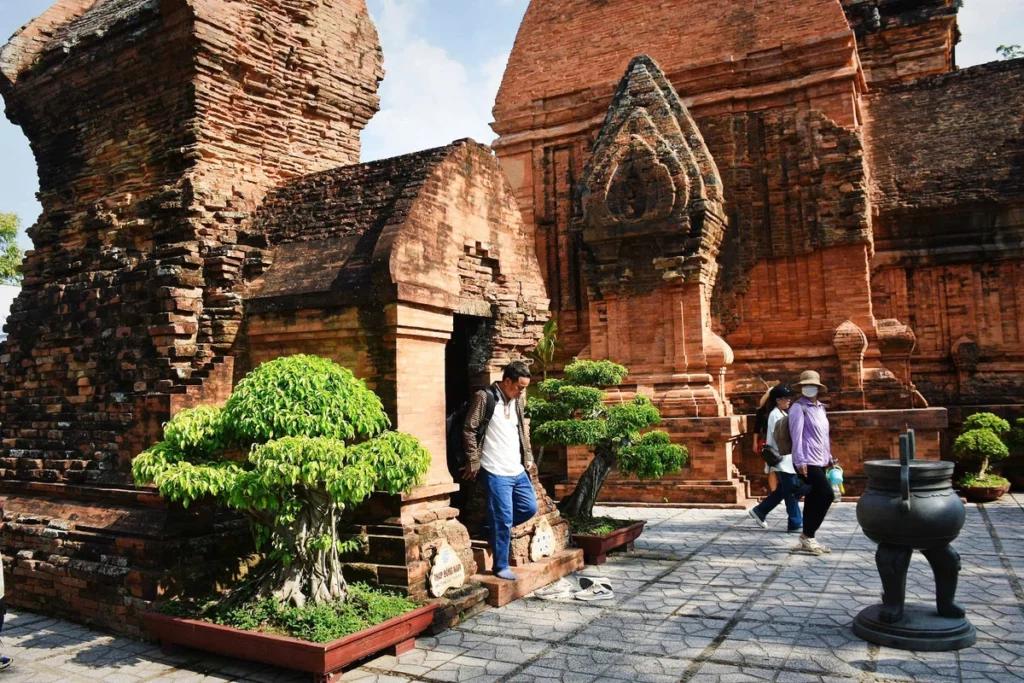
Po Nagar Cham Towers is widely regarded as one of the finest surviving examples of Cham architecture in Vietnam. Although centuries have passed since its construction, the complex continues to impress architects, historians, and travelers alike with its remarkable engineering, artistic refinement, and enduring structural integrity.
Originally, the sanctuary consisted of several temples built across three ascending levels, symbolizing a spiritual journey from the earthly realm to the sacred domain of the gods. Today, four principal brick towers remain, each dedicated to different deities worshipped by the Cham people.
The tallest and most prominent structure is the North Tower (Kalan), standing approximately 23 metres high. Dedicated to Po Ina Nagar, it houses a striking black granite statue of the goddess seated in meditation, adorned with multiple arms that symbolize her divine powers and generosity. For centuries, this tower has remained the spiritual heart of the complex, attracting pilgrims who seek blessings for health, peace, and prosperity.
One of the greatest mysteries surrounding Po Nagar lies in its construction techniques. The towers were built from reddish baked bricks that fit together with extraordinary precision, leaving almost no visible mortar between them. Despite decades of archaeological research, scholars continue to debate exactly how Cham builders achieved such seamless masonry and remarkable durability. This sophisticated craftsmanship remains one of the most fascinating aspects of Cham engineering.
Throughout the complex, visitors will encounter intricately carved sandstone lintels, decorative columns, and sculptural motifs depicting lotus flowers, celestial dancers, sacred animals, and Hindu-inspired iconography. These ornamental details reveal the artistic sophistication of the Champa Kingdom while illustrating the cultural exchanges that connected Vietnam with India and other civilizations across Southeast Asia.
Beyond their aesthetic beauty, the towers were carefully positioned to harmonize with the surrounding landscape. Overlooking the Cai River and facing the sea, the sanctuary reflects the Cham people’s deep respect for nature and their belief that mountains, rivers, and the ocean possessed profound spiritual significance. Even today, the peaceful setting enhances the contemplative atmosphere, inviting visitors to slow down and appreciate both the architectural achievement and the natural beauty that surrounds the site.
For photographers, the warm terracotta bricks, graceful tower silhouettes, and panoramic river views create some of the most captivating images in Nha Trang. Visiting during the early morning or late afternoon allows soft natural light to accentuate the intricate carvings while providing a more tranquil experience away from the busiest hours.
Cultural and Religious Significance
While Po Nagar Cham Towers is celebrated as an architectural masterpiece, its true significance extends far beyond its physical structures. More than twelve centuries after its foundation, the sanctuary remains an active place of worship where ancient traditions continue to thrive, making it one of the few heritage sites in Vietnam where history, spirituality, and everyday life coexist so naturally.
For the Cham community, Po Nagar represents one of the most sacred religious centres, embodying gratitude to the Mother Goddess for life, fertility, and prosperity. Traditional ceremonies held throughout the year continue to preserve rituals that have been passed down through generations, reinforcing a profound connection between cultural identity and spiritual practice.
The site’s importance also reflects Vietnam’s rich cultural diversity. Over time, Po Nagar became a shared place of devotion for both Cham and Vietnamese communities, illustrating how different beliefs can evolve together while respecting their distinct origins. This living heritage has helped preserve not only the physical monument but also the intangible traditions, music, dance, and ceremonial customs that define the sanctuary today.
Recognizing its exceptional historical and cultural value, Po Nagar Cham Towers has been designated as a Special National Monument of Vietnam. The designation acknowledges not only the site’s remarkable architecture but also its continuing role in safeguarding one of Southeast Asia’s most enduring cultural legacies.
For visitors, a journey to Po Nagar offers an opportunity to experience a different perspective of Nha Trang. Beyond its renowned beaches and vibrant coastal lifestyle, the city reveals a deeper narrative—one shaped by centuries of faith, artistic achievement, and cultural exchange. It is this rare combination of tangible heritage and living tradition that makes Po Nagar Cham Towers one of the most rewarding cultural experiences in Vietnam.
Po Nagar Festival – Celebrating a Living Spiritual Tradition
Among the many cultural events in Nha Trang, the Po Nagar Festival is one of the most important celebrations of Cham heritage and local spiritual life. Held annually from the 20th to the 23rd day of the third lunar month, the festival honors Po Ina Nagar, the Mother Goddess, whose legacy continues to inspire generations of Cham and Vietnamese communities.
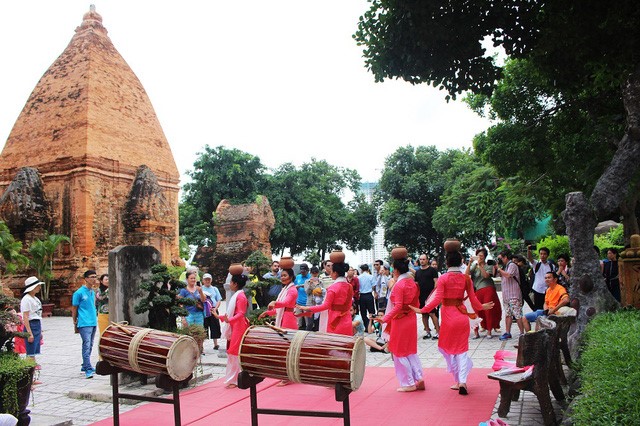
During these sacred days, the temple complex comes alive with traditional rituals, ceremonial offerings, and vibrant cultural performances. Pilgrims travel from across Vietnam to express gratitude and pray for peace, good health, abundant harvests, and prosperity. Visitors also have the opportunity to witness traditional Cham music, graceful dances, and colourful processions that have been preserved for centuries. Among these cultural performances, Cham dance remains one of the festival’s most captivating highlights. Accompanied by the rhythmic sounds of the Ghi-năng drum and Saranai flute, each graceful movement tells stories of devotion, nature, and the enduring spirit of the Champa Kingdom. Learn more about the history and symbolism of Cham dance at Po Nagar Cham Towers in our dedicated guide. Discover the Sacred Beauty of Cham Dance at Po Nagar Towers
Unlike many cultural performances created primarily for tourism, the Po Nagar Festival remains deeply rooted in authentic religious practice. The ceremonies continue to be led by local devotees and spiritual custodians, allowing visitors to observe a living tradition rather than a historical reenactment. This unique atmosphere offers meaningful insight into the enduring beliefs that continue to shape the cultural identity of central Vietnam.
If you plan to visit during the festival, arriving early in the morning is recommended, as the temple attracts large numbers of worshippers throughout the celebration. Respectful attire and quiet observation are appreciated while religious ceremonies are taking place
Visitor Information
A visit to Po Nagar Cham Towers typically takes between one and two hours, allowing ample time to explore the towers, admire the intricate carvings, enjoy panoramic views of the Cai River, and experience the peaceful atmosphere of this sacred site.
Opening Hours
Po Nagar Cham Towers is generally open daily from 6:00 AM to 6:00 PM.
Early morning offers cooler temperatures, softer natural light for photography, and a quieter atmosphere before larger tour groups arrive. Late afternoon is equally rewarding, with warm sunlight illuminating the ancient brick towers and creating spectacular views over the Cai River.
Entrance Fee
Visitors are required to purchase an entrance ticket before entering the temple complex.
As admission fees may be updated periodically by local authorities, guests are encouraged to check the latest information before visiting or consult the Concierge Team at Potique Hotel for current details and assistance with transportation arrangements.
Dress Code
As Po Nagar remains an active place of worship, visitors are kindly asked to dress respectfully.
Recommended attire includes:
- Clothing that covers the shoulders and knees.
- Comfortable walking shoes suitable for uneven stone steps.
- A hat, sunglasses, and drinking water, particularly during the warmer months.
- Modest behaviour while religious ceremonies are taking place.
Scarves or light shawls can also be useful for visitors wearing sleeveless clothing.
Photography
Photography is welcome throughout most areas of the complex and offers countless opportunities to capture the beauty of Cham architecture. Visitors are encouraged to remain respectful by avoiding flash photography inside worship areas and refraining from interrupting religious ceremonies or worshippers.
Best Time to Visit
Po Nagar Cham Towers can be visited throughout the year, but the experience varies with the seasons.
The dry season, typically from January to August, offers pleasant weather and clear skies, making it the ideal time to explore the site and enjoy panoramic views across Nha Trang.
For photography enthusiasts, the best lighting conditions occur:
- Early morning (7:00–9:00 AM) for soft light and fewer visitors.
- Late afternoon (3:30–5:30 PM) for warm golden tones that beautifully enhance the temple’s terracotta brickwork.
Visitors wishing to experience local traditions may also consider planning their trip around the annual Po Nagar Festival, when the sanctuary becomes a vibrant centre of spiritual and cultural celebration.
How to Get to Po Nagar Cham Towers from Potique Hotel
Conveniently located in the heart of Nha Trang, Potique Hotel provides easy access to many of the city’s cultural landmarks, including Po Nagar Cham Towers.
The temple complex is situated approximately 2.7 kilometres from the hotel and can be reached in around 10 minutes by car, depending on traffic conditions.
Guests may choose from several transportation options:
- Taxi or ride-hailing services such as Grab for a quick and convenient journey.
- Bicycle or motorbike for travellers wishing to explore the city at their own pace.
The route follows the scenic coastal road before crossing the Cai River, offering glimpses of everyday local life and beautiful waterfront views along the way.
Nearby Attractions
A visit to Po Nagar Cham Towers can easily be combined with several of Nha Trang’s most popular cultural and natural attractions, creating a rewarding half-day itinerary.
Hon Chong Promontory
Located just a few minutes away, Hon Chong is renowned for its dramatic granite rock formations, peaceful coastal scenery, and sweeping views of Nha Trang Bay. It is an ideal stop for photography and a leisurely seaside walk.
Long Son Pagoda
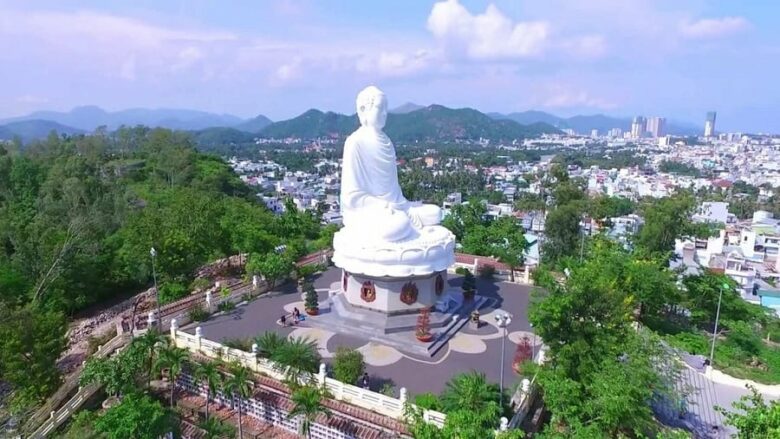
One of the city’s most iconic Buddhist landmarks, Long Son Pagoda is famous for its impressive white Buddha statue overlooking Nha Trang. The temple offers visitors a tranquil atmosphere and panoramic city views after a short climb.
Dam Market
For those wishing to experience local life, Dam Market provides an excellent opportunity to discover regional specialties, handicrafts, fresh produce, and traditional Vietnamese cuisine in one of Nha Trang’s busiest commercial centres.
Nha Trang Cathedral
Built in the French Gothic architectural style, Nha Trang Cathedral showcases another chapter of the city’s cultural history. Its elegant stone façade and peaceful surroundings make it a worthwhile addition to any cultural itinerary.
Suggested Half-Day Cultural Itinerary
For guests staying at Potique Hotel, the following itinerary offers a balanced introduction to Nha Trang’s heritage:
8:00 AM – Depart Potique Hotel.
8:15 AM – Explore Po Nagar Cham Towers.
10:00 AM – Visit Hon Chong Promontory.
11:00 AM – Stop at Long Son Pagoda.
12:30 PM – Return to Potique Hotel or enjoy authentic local cuisine before continuing your afternoon.
This route combines history, spirituality, architecture, and scenic beauty while remaining comfortably achievable within half a day.
Discover Nha Trang’s Cultural Heritage with Potique Hotel
A visit to Po Nagar Cham Towers is more than a journey into history—it is an opportunity to discover the cultural essence of Nha Trang. Beyond its pristine beaches and vibrant coastline, the city reveals a rich tapestry of heritage, spirituality, and artistic traditions that continue to shape its identity today.
Inspired by the elegance of Indochine architecture and Vietnam’s rich cultural legacy, Potique Hotel offers an authentic gateway to these timeless experiences. From the moment you arrive, every detail—from handcrafted décor and locally inspired artworks to warm Vietnamese hospitality—reflects the stories and traditions that define the destination.
Our team is delighted to assist guests in planning personalised cultural experiences, including transportation arrangements, recommended visiting hours, and bespoke itineraries that combine Po Nagar Cham Towers with other iconic attractions across Nha Trang. Whether your interests lie in history, architecture, local cuisine, or hidden gems beyond the city centre, our local expertise ensures every journey is thoughtfully curated.
After a rewarding day of exploration, return to the comfort of Potique Hotel to unwind in elegant surroundings, savour refined Vietnamese and international cuisine, or simply relax while reflecting on the stories of one of Vietnam’s most treasured heritage sites.
At Potique Hotel, every stay is designed to connect discerning travellers with the authentic spirit of Nha Trang—where culture, history, and contemporary luxury come together in perfect harmony.
Frequently Asked Questions (FAQ)
What is Po Nagar Cham Towers?
Po Nagar Cham Towers is an ancient temple complex built by the Champa Kingdom between the 8th and 13th centuries. Dedicated to the goddess Po Ina Nagar, it is one of Vietnam’s most significant cultural and religious heritage sites and remains an active place of worship today.
Where is Po Nagar Cham Towers located?
The temple complex is situated on a hill overlooking the Cai River in Nha Trang, Khanh Hoa Province, approximately 2.7 kilometres north of Potique Hotel and around a 10-minute drive from the city centre.
Is Po Nagar Cham Towers worth visiting?
Absolutely. Po Nagar offers a unique combination of history, architecture, spirituality, and panoramic views, making it one of the must-visit attractions in Nha Trang for travellers seeking more than a beach holiday.
How much time should I spend at Po Nagar Cham Towers?
Most visitors spend between one and two hours exploring the temple complex, admiring the architecture, enjoying the surrounding views, and learning about Cham history and culture.
What should I wear when visiting?
As Po Nagar remains an active religious site, visitors are encouraged to wear clothing that covers the shoulders and knees. Comfortable footwear is also recommended, as some areas include uneven stone pathways and steps.
When is the best time to visit?
The ideal times are early morning or late afternoon, when temperatures are cooler and the natural light is particularly beautiful for photography. Visiting during the annual Po Nagar Festival also offers an opportunity to experience authentic Cham cultural traditions.
Is photography allowed?
Yes. Photography is generally permitted throughout the complex. Visitors are kindly asked to remain respectful by avoiding flash photography inside worship areas and refraining from disturbing religious ceremonies.
Can foreign visitors enter the temple?
Yes. Po Nagar Cham Towers welcomes both domestic and international visitors throughout the year. Guests are simply encouraged to observe local customs and maintain respectful behaviour while exploring the sacred site.
Is Po Nagar Cham Towers suitable for families?
Yes. The temple complex is suitable for travellers of all ages. Families with children, history enthusiasts, photographers, and cultural explorers will all find something memorable to enjoy.
What other attractions are nearby?
Many visitors combine Po Nagar Cham Towers with nearby attractions such as Hon Chong Promontory, Long Son Pagoda, Nha Trang Cathedral, and Dam Market, creating a rewarding half-day cultural itinerary.
Conclusion
Standing proudly for more than a millennium, Po Nagar Cham Towers remains one of the finest expressions of the Champa Kingdom’s architectural brilliance and spiritual heritage. More than an ancient monument, it is a living cultural landmark where history, faith, and local traditions continue to thrive.
Whether you are admiring its distinctive brick towers, learning about the legend of Po Ina Nagar, or simply taking in panoramic views over the Cai River, every visit offers a deeper understanding of the cultural richness that lies beyond Nha Trang’s celebrated coastline.
For travellers seeking a meaningful connection with the destination, Po Nagar Cham Towers is an experience not to be missed. Together with the warm hospitality and local expertise of Potique Hotel, it forms part of a journey that celebrates not only the beauty of Nha Trang, but also the enduring heritage that makes this coastal city truly unforgettable.
Continue Your Cultural Journey with Potique Hotel
After discovering the thousand-year-old legacy of the Cham civilization at Po Nagar Cham Towers, continue your journey through Nha Trang’s rich cultural heritage with a stay at Potique Hotel.
Inspired by Vietnamese craftsmanship and timeless elegance, Potique Hotel is a luxury boutique hotel in Nha Trang where local culture is reflected in every detail, from its architecture and interiors to its warm hospitality. Conveniently located near many of the city’s historic landmarks, the hotel offers an ideal base for travellers seeking authentic cultural experiences alongside modern comfort.
Whether you’re exploring ancient temples, local museums, or traditional cuisine, Potique Hotel brings you closer to the stories that make Nha Trang truly unforgettable.